
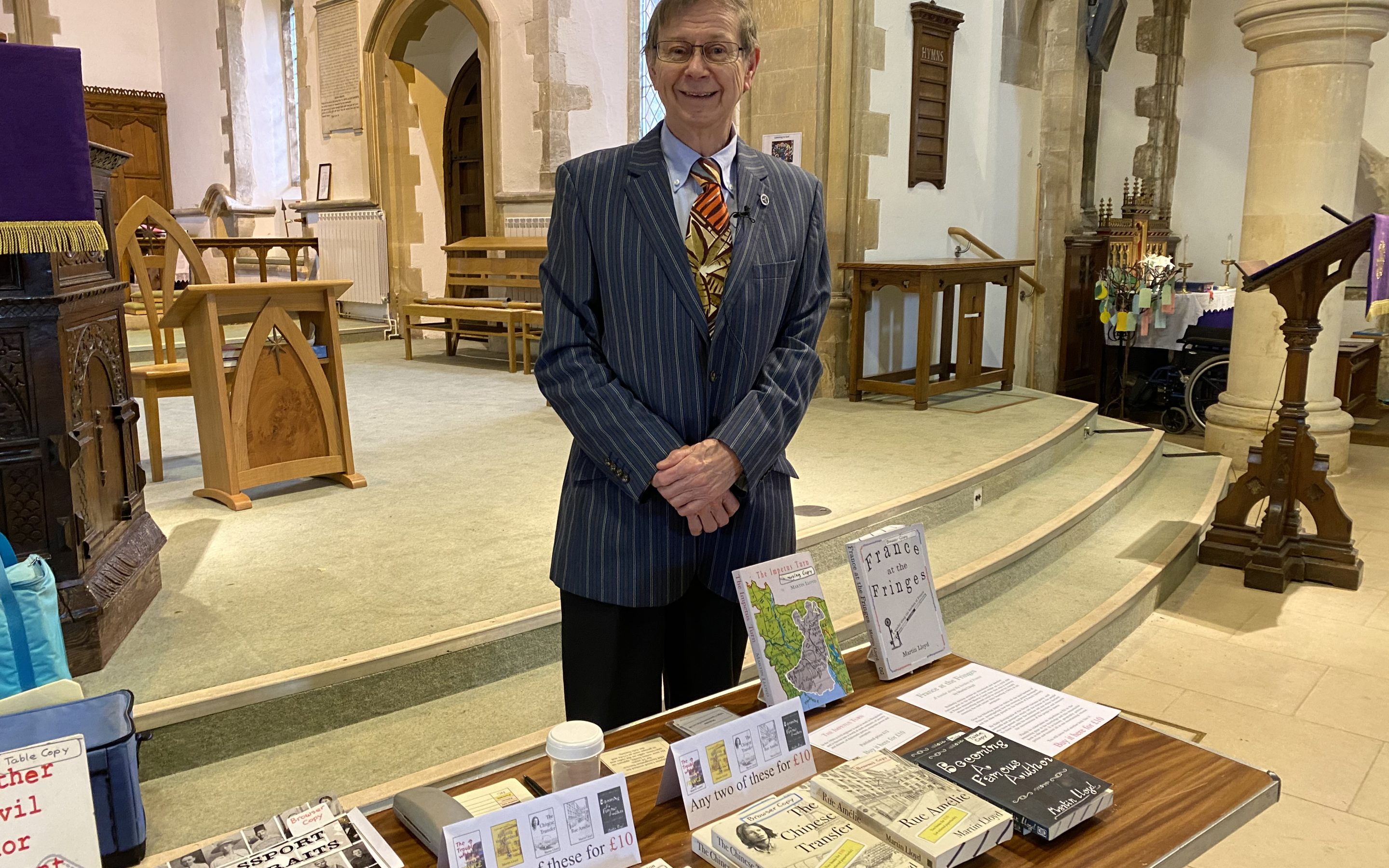
We had a very good turn out for our March monthly meeting at St Mary’s Church. Martin Lloyd, our speaker, worked in HM Immigration Service for 24 years so there’s very little, if anything, he doesn’t know about the history of the passport, in fact he has written a book about them.
Speaking, impressively, without notes Martin told us about three events which had changed passports and immigration laws around the world. Firstly how an Italian, Count Orsini, with the aid of British accomplices had attempted to assassinate Emperor Napoleon III. The Emperor escaped unharmed but the attack lead to the death of eight people and over 100 being injured. The Count had entered France using a British passport and a stolen identity, passports at the time only showed the person’s name and that they were a British Citizen, there was no description of the person on the document. This lead to the downfall of the Palmerston Government, France and Belgium changing their rules around passports and to the execution of the Count
The second story was about espionage. In August 1914 Germany and Russia declared war. Charles Engliss, an American Citizen, took his passport to the Embassy to get an exit permit. But when he went to collect it he was told that it had already been picked up. A man using his identify travelled to England, supposedly in transit home to America, instead he look lodgings in Scotland overlooking a naval base. Letters he sent to Norway were intercepted and were found to contain a second letter for onward posting to Germany, these detailed the British reaction to the declaration of war. The imposter was a German spy, he was captured, found guilty and sent to the Tower of London. His was the first execution for espionage at the Tower of London for over 200 years.
Finally, we were told a tale of treachery. Two weeks after the end of hostilities in May 1945 soldiers encountered a man on the border between Denmark and Germany. The man in question was revealed to be William Joyce, aka Lord Haw Haw of the ‘German calling’ anti-British propaganda broadcasts. Joyce had a complex nationality history. He was born British, relinquished this to take American citizenship when father took the family to America, he later travelled back to Britain and falsely obtained a British passport by claiming that he had been born in Ireland. At the time he was actually an American citizen and America wasn’t at war with Germany, by the time he became Lord Haw Haw he had become a German Citizen. William Joyce was found guilty of anti-British propaganda, he appealed as his crimes were committed outside of Britain but these were dismissed, and was executed at Wandsworth prison. Along the way Martin explained the complexities of the regulations around passports and the Treason Act, casting more than a few aspersions on the absurdities revealed by these stories.